IPL Betting Guide: Odds, Markets and Smart IPL Bet Basics

If you are new to IPL betting, this is the right place to slow things down and understand how the whole thing actually works.
A lot of people come into the IPL season with a very simple idea in their head: pick the stronger team, back a famous player, and trust the match to follow the script. Sometimes it does. Plenty of times it does not. That is exactly why betting on the Indian Premier League gets people into trouble so quickly. The tournament is fast, emotional, and noisy. One over changes the tone of the game, one toss changes the innings setup, and one role change can make yesterday's obvious pick look much weaker today.
That is why a decent IPL bet usually starts with process, not excitement.
This guide is built to give you that process. It explains how the main cricket markets work, what odds are actually telling you, which betting angles deserve more attention, and where casual users usually make avoidable mistakes. If you want the broader site hub, go back to the homepage. If you already understand the basics and just want current prices, the best next step is IPL Odds Today.
What IPL Betting Really Is
At the simplest level, IPL betting means taking a position on a cricket market based on how you think a match will unfold.
That position can be very broad, like backing the match winner. Or it can be more specific, like backing a top batter, a wicket line, or a sixes market. The key thing to understand is that betting is not the same as prediction.
A prediction says, "I think this team wins."
A betting decision says, "I think this team wins, and I also think the price is worth taking."
That second part matters more than beginners usually expect.
A team can still be the likelier winner and still be a poor bet if the odds are too short. On the other side, a less convincing team can become interesting if the market has gone too far the other way. Once you understand that difference, the whole subject starts making more sense.

Why IPL Is Harder Than It Looks
The IPL often feels easy to read from the outside because the tournament is so familiar. Everyone knows the teams, the star names, the venues, the rivalries. That familiarity can be misleading.
What makes IPL betting tricky is that the tournament combines:
- public overreaction;
- aggressive batting narratives;
- fast-changing match momentum;
- strong fan bias around certain teams;
- player-role shifts that are easy to miss;
- markets that react quickly to news and noise.
That means a lot of users are not really reading the match. They are reacting to the loudest version of it.
A cleaner approach is quieter. You look at the team shape, the venue, the likely innings pattern, the role of key players, and only then ask whether the market is offering something worth taking.
The Main IPL Betting Markets
This is where most beginners start, but it helps to keep it simple. Not every market deserves the same attention, and not every market should be read the same way.
Match Winner
This is the easiest market to understand. One team wins, one team loses.
It is also the market most casual users lean on because it feels clear and familiar. That is fine, but it comes with a trap: people often back the team they expect to win without checking whether the price makes sense.
A better match-winner read should account for:
- team balance;
- venue fit;
- recent form;
- chasing versus defending comfort;
- whether the likely winner is already overpriced.
If you want the daily price version of that thought process, use IPL Odds Today.
Top Batter
This market looks simple, but it is usually weaker when people read it emotionally.
The right way to think about it is not "who is the biggest name?" but:
- who is most likely to face enough balls?
- whose role is stable?
- whose matchup looks clean?
- which batting position gives the best chance to build a proper innings?
A flashy finisher is not automatically a better bet than a stable number three.
Top Bowler and Wickets Markets
These markets usually make more sense once you start thinking about role.
A bowler's value depends on:
- when they bowl;
- whether they work in the powerplay;
- whether they bowl at the death;
- how the opposing batting unit plays under pressure;
- whether the pitch supports their style.
That is why wicket markets can be more interesting than casual users assume. They often reward better structural thinking.
Team Totals and Runs Markets
These are useful when you think the shape of the innings matters more than the final winner.
Things that usually matter here:
- pitch behavior;
- batting depth;
- chasing conditions;
- powerplay scoring pattern;
- whether the bowling attack can slow the innings down.
These markets can be very practical, but only if the match script behind them is clear.
Player Props
This is where many users start finding cleaner angles.
Sometimes the team result feels messy, but one player role stands out clearly. That is often a sign that the main winner market may not be the best place to express your read.
That is exactly why the IPL Player Props Guide exists.

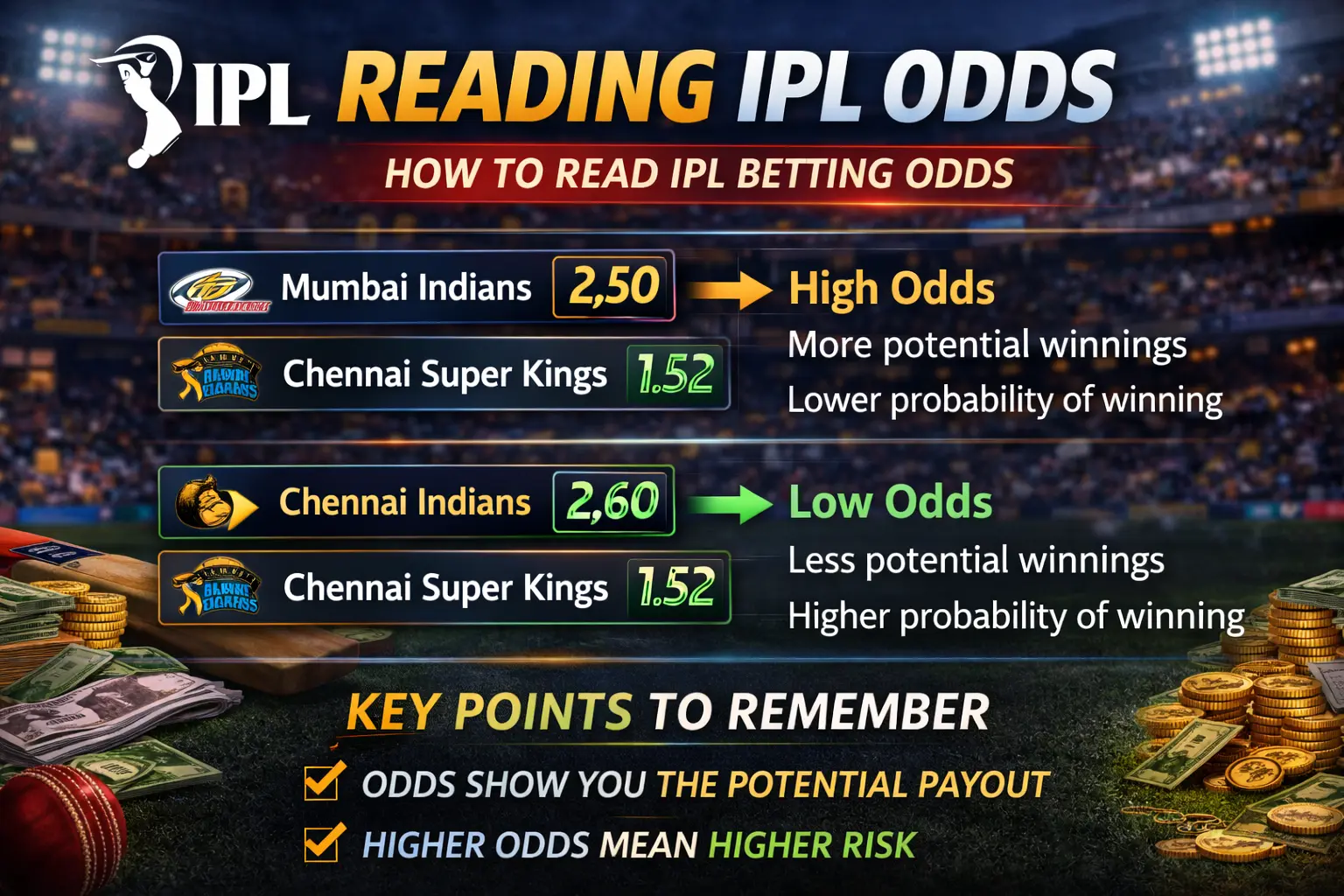
How to Think About Odds Properly
A lot of beginners think they understand odds because they can spot the favorite. That is not the same thing as reading the market well.
Odds are not only telling you who the market prefers. They are telling you how strongly the market prefers that side and how expensive that preference has become.
That means a good question is not just:
- who should win?
It is also:
- has the market priced that correctly?
- is this number still usable?
- would the same match idea be better expressed in another market?
This is where people usually get sharper. They stop looking for the "safe winner" and start looking for a fair number.
The Five Things to Check Before Any IPL Bet
This is the simplest useful framework on the page.
Match Context
Is this a routine fixture, a pressure game, a rivalry, or a qualification-shaped contest?
Team Form
Not just wins and losses. How is the team actually playing?
Venue and Pitch
Does the ground help one style more than the other?
Player Role
Who has the cleanest role? Who is overvalued because of name recognition?
Price
Does the number still justify the bet?
If you build your decisions around those five checks, you are already ahead of a lot of casual IPL bettors.
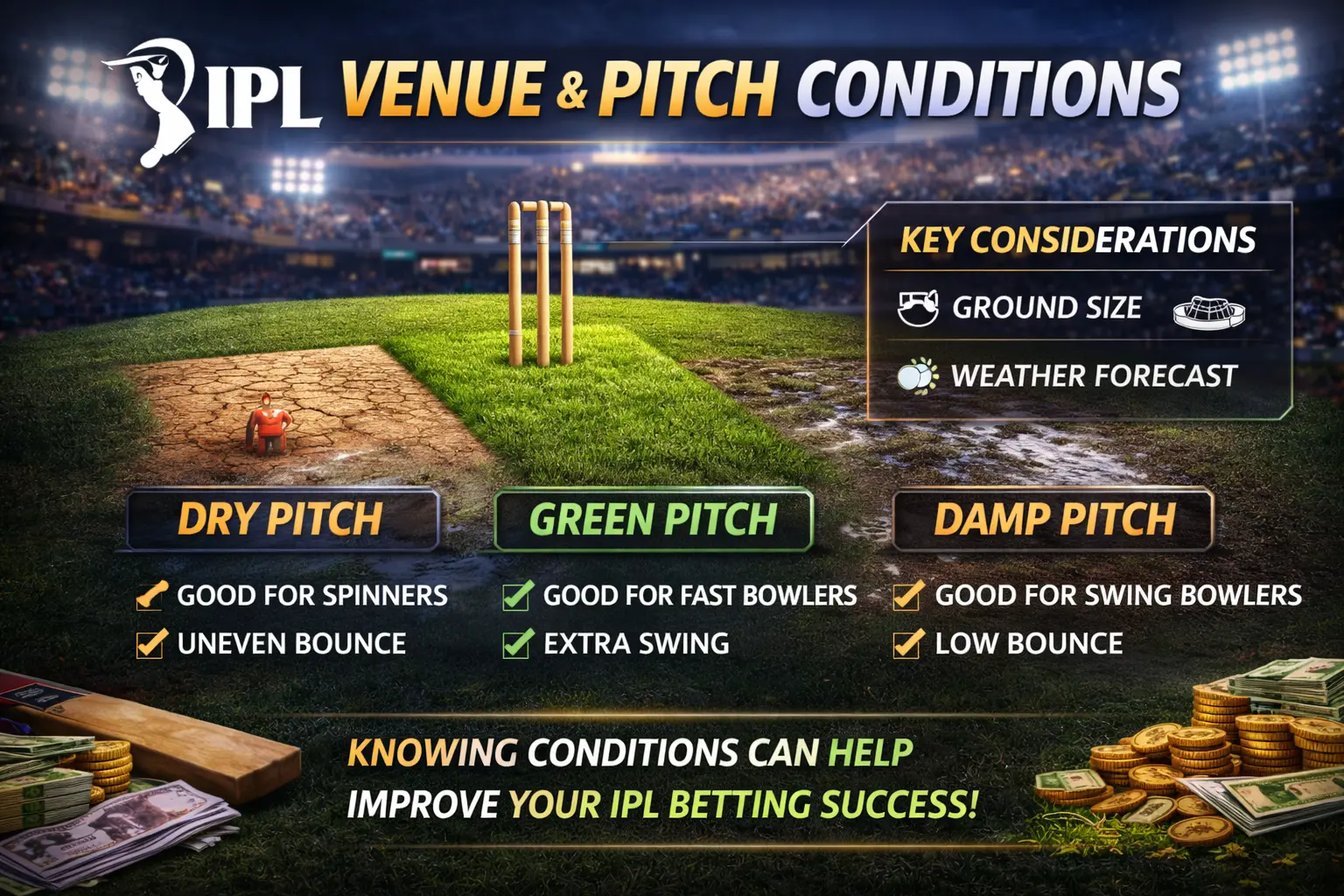
Why Venue Matters More Than People Think
A lot of betting content mentions the venue and then moves on too quickly.
That is a mistake.
Venue is not background detail. In the IPL, it often shapes the whole match:
- scoring pace;
- batting comfort;
- bowling control;
- chasing value;
- player-market suitability.
A strong batting side on one ground may look much less comfortable on another. A bowler who feels dangerous in one venue may become much less attractive in a flatter setting. Once you start treating the venue as part of the matchup rather than scenery, your reads get a lot cleaner.
Why Team Form Is Easy to Misread
"Form" sounds useful until people use it lazily.
A team that won two matches may still look structurally messy. A team that lost a close match may still be in a healthier place than the market thinks. That is why form needs to be read through phases:
- powerplay control;
- middle-overs stability;
- finishing quality;
- bowling under pressure;
- reliance on a few players.
If you want the franchise-level version of that, use the IPL Teams Guide.
Common Mistakes in IPL Betting
This is the section most people actually need.
Backing the stronger name instead of the better angle
This happens all the time. The better-known team or player feels easier to trust. That does not mean the price is good.
Ignoring the odds
Plenty of users make a pick and only glance at the number afterward. That is the wrong order.
Treating every venue the same
Ground conditions change game shape. Ignoring that is one of the fastest ways to make shallow calls.
Overreacting to one previous match
A huge innings or one collapse can distort how users see a team or player. IPL is noisy. One result is not the whole truth.
Skipping role analysis
This is especially costly in player markets. Role usually matters more than star status.
A Clean Beginner Path Through the Site
If you are just getting comfortable with IPL betting, do not try to learn everything at once.
A cleaner route looks like this:
Start with the IPL Schedule if you need the match slate.
Use the IPL Teams Guide if the team identity is unclear.
Check IPL Odds Today to see the market.
Use IPL Predictions Today if you want a quicker opinion layer.
Move into the IPL Player Props Guide if the better angle looks player-driven.
That route is much more useful than trying to solve the whole tournament from one page.
Final Take
A better IPL bet rarely comes from one genius opinion. Most of the time, it comes from being a little more disciplined than the average user.
Read the match properly. Respect the venue. Understand the role. Check the price. And do not force action when the market already feels too tight.
That is the point of this guide. Not to make betting feel dramatic, but to make it feel clearer.